
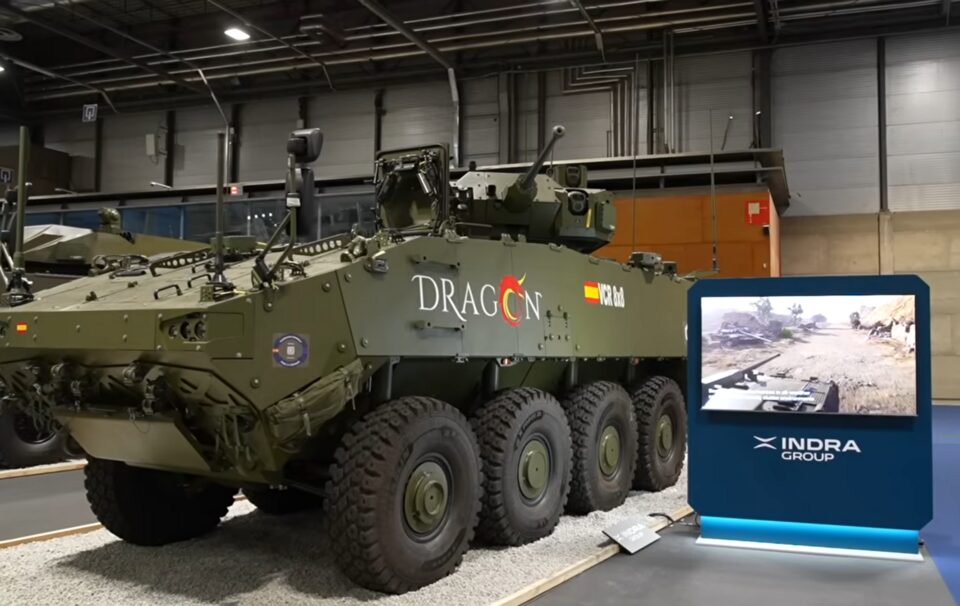
When someone mentions a dragon, the first thing that probably comes to mind is Game of Thrones. However, the 8×8 Dragón is a giant in its own right: an eight-wheeled combat vehicle. And if you’re wondering what the Dragón has to do with MicroNanoSpain, the answer lies in something that cannot be seen from the pavement: the electronics that allow it to observe its surroundings, manage information and coordinate with other units. Its mission system, Maestre, developed by Indra, connects sensors and subsystems to help the crew understand what is happening around the vehicle. Behind these functions are semiconductors: components that capture signals, process data and enable communications.
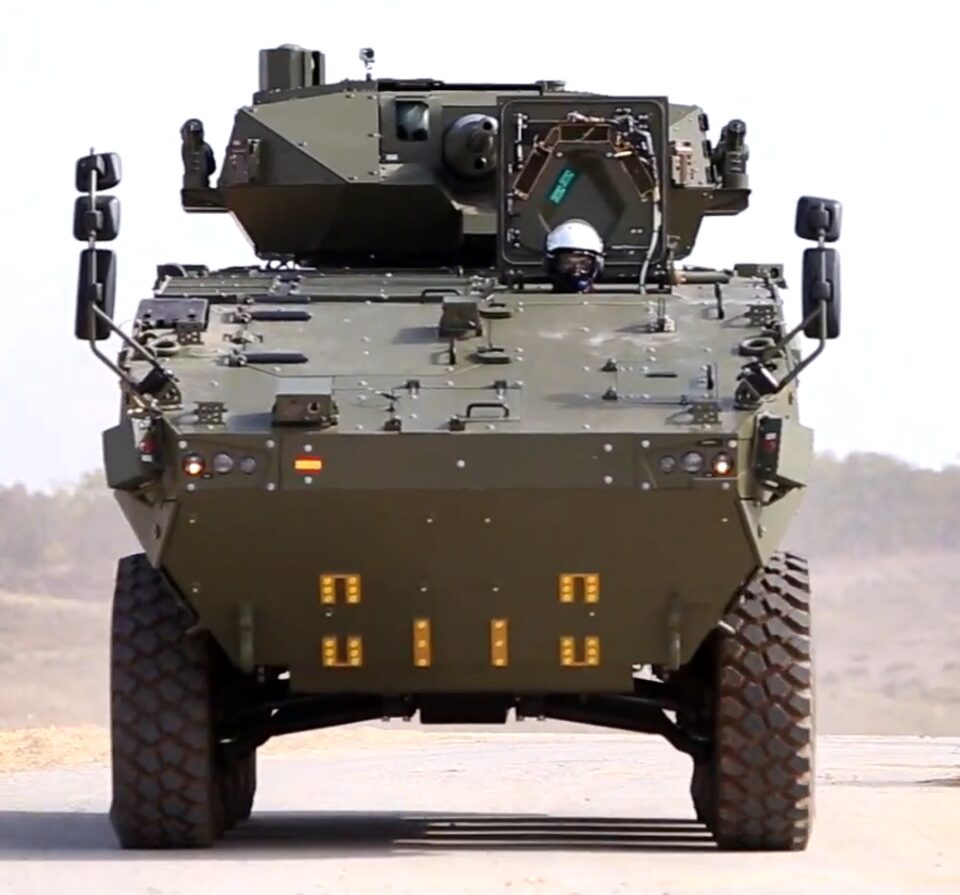
Spain’s military parade on 12 October offers a magnificent opportunity to look at this technology from a different perspective, as, according to the Spanish Ministry of Defence, the Dragón will take part in this year’s parade alongside the Spanish Armed Forces. Its presence raises a question that goes beyond its armour or eight wheels: how does a vehicle transform what its sensors detect into useful information for the people operating it?
Seeing beyond the armour starts with a sensor
Observing the surroundings from inside a protected vehicle presents an obvious difficulty: the armour limits direct visibility. But that is not all. On the battlefield, it is necessary to have as much information as possible about the surrounding environment in order to analyse the situation and make the best decisions. Furthermore, it is not enough to look straight ahead; the crew must also be aware of what is happening behind the vehicle and even in the sky.
For this reason, in May 2024, Indra presented the Spanish Ministry of Defence with an evolution of its 360-degree vision system, designed to be integrated with the Dragón’s mission system. The company explained that it used images from visible-light, night-vision and infrared cameras, together with artificial intelligence algorithms, to support the analysis of the surrounding environment under the crew’s supervision.
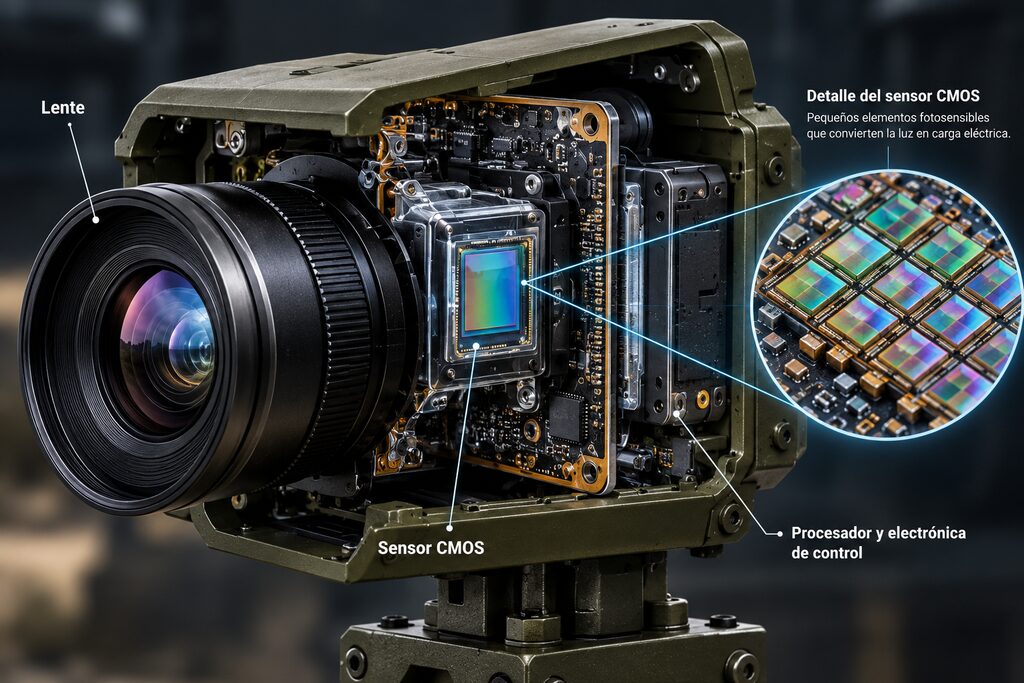
Although sensors are also present in other parts of the vehicle, semiconductors are found in many of the components that make up this 360-degree vision system. For example, visible-light cameras use sensors similar to those found in conventional video cameras, although there are significant differences. These are called CMOS sensors, commonly used in digital cameras. CMOS sensors contain tiny photosensitive elements that receive a certain amount of light and convert it into an electrical charge, which is then read by a processor and converted into pixels.
That is why a camera is much more than a simple lens; if we zoom in, we find a large number of semiconductors inside it.
From images to screens: what does processing contribute?
Capturing an image is only the first step. It then needs to be processed, ensuring that the information reaches the crew in time and in a form they can interpret quickly.
Imagine a camera mounted on the outside of the vehicle. It can capture a highly detailed image, but that alone is not enough. The image must be converted into data, processed and delivered to a screen inside the vehicle. The key lies in how quickly the image travels from the moment it is captured until it appears on the screen.
This is where the decisions made when designing the electronics have very specific consequences. If we want to process and transmit large amounts of information very quickly, we need sufficient computing and data transfer capacity, along with the energy consumption and heat generation that this entails. In other situations, it may be preferable to reduce the amount of data being processed to obtain a faster response. For those who design chips and electronic systems, the challenge lies precisely in finding this balance while considering the needs of the final application.
In a vehicle such as the Dragón, the ability to distinguish between valuable images and those that are less relevant must also be a priority. A camera can continuously generate images of its surroundings, but the aim is not to fill the screens with data: it is to turn that data into information that helps the crew interpret what is happening around the vehicle.
Thus, between the external camera and the screen viewed by the crew, there is an electronic chain that must capture, convert, process and transfer information in a very short time. Semiconductors are present throughout this chain and influence aspects that are directly noticeable to the user, such as how quickly an image appears, how much detail it can display and what processing can be performed on it.
GPS and Galileo: positioning also requires electronics
Once the crew can observe what is happening around the vehicle, another need arises: knowing where they are and relating that position to the information they receive. Satellite navigation systems are essential for this. Their operation also depends on semiconductors: chips on board the satellites make it possible to transmit radio signals that the vehicle’s receivers capture and process to calculate its position, using information received from several satellites.
GPS and Galileo provide positioning, navigation and timing information to systems equipped with a compatible receiver. However, Galileo has one particularly important characteristic from a strategic perspective: it is an independent European system under European control. The European Space Agency (ESA) itself points out that one of the main reasons for developing Galileo was precisely European independence in a technological field considered strategic.
This does not mean that Galileo necessarily replaces GPS. In fact, both systems can be used together, increasing signal availability and navigation robustness. The fundamental difference is that Europe does not depend exclusively on navigation infrastructure controlled by third parties. This commitment to technological autonomy also extends to space communications, where we once again find Indra, which has recently acquired Hispasat and control of Hisdesat, two Spanish companies that operate satellite services, including those intended for defence and security.
Therefore, in a system such as Maestre, the importance of Galileo lies not only in obtaining a geographical position, but also in the possibility of integrating a European source of positioning and synchronisation into a strategically important technological architecture.
Communications and radar: two different functions, one microelectronic foundation
Knowing your own position becomes more useful when it can be shared. Indra explains that the Battlefield Management System (BMS), integrated with Maestre, enables the exchange of tactical information, positions and sensor data between units. Electronics therefore cease to serve only the individual vehicle and begin to support its coordination with others.
These systems require more than just processors to manage information. They also rely on radio-frequency (RF) semiconductors and power semiconductors, which are essential for the operation of electronic equipment. Communications involve various circuits responsible for generating, amplifying, transmitting and receiving signals, such as power amplifiers, low-noise amplifiers, mixers and frequency converters. These technologies also have applications in systems such as radar, which can detect objects and determine characteristics such as their distance or speed.
These functions also demonstrate why talking about “chips” does not mean talking exclusively about processors: it also includes components capable of handling radio-frequency signals.
Semiconductors will also be part of the October 12 parade
For all these reasons, we can say that semiconductors will also be taking part in this 12 October parade, not because an individual chip or sensor will be marching down the streets, but because these components are becoming increasingly important in the defence sector. Examples such as the 8×8 Dragón and the systems developed by Indra make it clear that electronic components form part of the sector’s strategic priorities in both European and Spanish defence.
And you, will you be going to Madrid to watch the chips and dragons parade? Or will you be using electronic components to watch them parade through Madrid instead?