
29 October 2026 · UPC Barcelona
One-day Chip Design
Education Workshop
A chip design education workshop in Barcelona connecting academia, research and industry to prepare the next generation of semiconductor professionals.





Registration
Secure your place at the workshop.
Complete the form to attend. Confirmation and practical event information will be sent to the email address provided.
- •Thursday, 29 October 2026
- •Registration from 09:00
- •UPC Campus Nord, Sala de Actos del Edificio Vèrtex (Campus Nord UPC), Plaça d'Eusebi Güell, 6, 08034 Barcelona
The starting point
Designing chips starts with designing talent.
A working day in Barcelona where universities, research centres, industry and ecosystem organisations will define how chip-design education should evolve.
The goal is to share real needs, identify approaches that already work and build a common roadmap for the next generation of semiconductor professionals.
Day programme
An agenda designed to turn reflection into action.
Registration
Welcome and attendee registration.
Opening & Motivation
Institutional welcome and objectives for the day. Antonio Rubio, Professor Emeritus, Universitat Politècnica de Catalunya (UPC)
Syllabus I. Current reality and the future of education
A shared diagnosis of content, capabilities and the evolution of chip-design education.
Session host: Antonio Rubio, Catedrático Emérito de la Universitat Politècnica de Catalunya (UPC)
Speakers and talks:
- Bachelor's Degree in Chip Design. Roger Espasa, CEO and Founder, Semidynamics.
- Chip Design: From Master's to Bachelor's Degree. Jordi Carrabina, Full Professor, Dept. of Microelectronics and Electronic Systems, UAB.
- Strengthening Chip Design Capabilities at the Bilbao School of Engineering: Experiences, Achievements and ChallengesArmando Astarloa, Full Professor, Bilbao School of Engineering (EHU).
- Exploring the Back-End: Assembly and Packaging. Guillermo Carpintero, Full Professor, Department of Electronic Technology, UC3M
- Challenges in Electronics Studies. Vicente Jiménez, Professor, Department of Electronic Engineering (UPC).
- Online. Training the Talent of the Future in Microelectronics: From Devices to Chip Design. Carlos Sampedro Matarín. Director of Knowledge Transfer and Innovation, Vice-Rectorate for Research and Knowledge Transfer, University of Granada
- Beyond Electronics: Skills for the Next Generation of Chip Designers. Armand Estévez, Project Engineer, Optoelectronics Group, ICFO.
Coffee break
Coffee and conversation among participants.
The future of tools and digital design
New tools, digital flows and capabilities required for advanced design.
Session host: Teresa Cervero, Leading Research Engineer, Barcelona Supercomputing Center (BSC) & Antonio Núñez, Full Professor and Professor Emeritus, University of Las Palmas de Gran Canaria (ULPGC), and Founder of the Institute for Applied Microelectronics (IUMA)
Speakers and talks:
- Accessible Silicon with Open-Source Tools and Multi-Project Chips. Matt Venn, Co-founder, TinyTapeout.
- Opportunities of Open Hardware and Software for Microelectronics Teaching in Spain. Andrés Otero, Associate Professor, Centre for Industrial Electronics and Multimodal Systems (UPM).
- Democratising Silicon: How to Design Your Own Chips with Free Software. Francesc Moll-Echeto, Professor, Department of Electronic Engineering, Universitat Politècnica de Catalunya.
- From RTL to SoC: A Perspective on Digital Design Education.Óscar Plata González, Full Professor, Department of Computer Architecture (UMA)
- Paper, Pencil, and Open-Source Software for MMIC Design.Enrique Márquez, Full Professor, Department of Communications Engineering, University of Málaga
- From Learning to Implementing: The Leap into the Void in Chip Design. Sergio Gómez (UPC).
Lunch break
An informal space to connect and continue conversations.
Syllabus II. The impact of AI on education
Session host: Rafael Gomà, Senior Research Engineer, Barcelona Supercomputing Center (BSC)
Speakers and talks:
- Experiences with AI from the Professor's Office and Its Application to Teaching Computer Architecture Courses with RISC-V. José Flich Cardo, Full Professor, Computer Architecture and Technology, UPV.
- Online. AI in a Microelectronics Curriculum. Antonio José Acosta, Full Professor, University of Seville (IMSE-CNM, CSIC-US).
- AI in Analogue Design Methodologies: Will We Still Need Designers? José Roque (Roc) Berenguer, Professor of Electricity and Electronics, TECNUN (University of Navarra).
- How AI Is Changing Chip Design. Miquel Aberti , BSC Researcher.
- Integrated Circuit Design: A Specialisation Track in the Bachelor's Degree in Electronic and Telecommunication Engineering at the University of Barcelona. Oscar Alonso, Associate Professor, Department of Electronic and Biomedical Engineering, UB.
- Artificial Intelligence and Human Responsibility: Impact on Microelectronic Engineering. Eugenio Villar, Full Professor, Electronic Technology, University of Cantabria.
- Use of AI as Chip Physical Design engineer: fast, useful, and dangerous If unsupervised. Christian Fabiano. ASIC Physical Design Technical Leader, CISCO.
Break
Rest and networking.
Academia–Industry relationship
Session host: Oriol Recasens Benito, Secretary and Head of the Department of Science and Innovation, Barcelona City Council
Speakers and talks:
- Connecting Academia and Industry: Experience, Needs and Opportunities. By Vincent Casillas, Chief Technology Officer (CTO) and Member of the Executive Committee, SiPearl
- Online Talk. Why Do Academia and Industry Need Each Other More Than Ever? By Paula López Martínez, Full Professor of Electronics and Deputy Director of CiTIUS, USC
- 2031: The Engineering Odyssey Rethinking Chip Design and Talent in the AI Era Openchip’s Perspective By Ricardo Martinez, Senior ASIC Engineer - Technical Lead, Openchip
- From Chip Design to Fabrication: Closing the Skills Gap for Next-Generation Semiconductor Engineering. By Sergi Claramunt / Jemish Parmar — Device Characterization Engineer / CTO, IDEADED
- eHardware: A Remote FPGA Platform for Virtual Teaching of ASIC Design Prototyping and Validation By Fernando Rincón Calle, Associate Professor, Department of Information Technologies and Systems (UCLM)
Final
Conclusions and next steps by Roger Costa, Senior Semiconductor Projects Consultant at ACCIÓ and Coordinator of the Government of Catalonia’s Semiconductor Strategy
Getting there
UPC Campus Nord
Plaça d'Eusebi Güell, 6, 08034 Barcelona

Who it is for
A space for those who teach, hire and transform.
The workshop brings together the people shaping education, research, recruitment and collaboration across the semiconductor ecosystem.

Universities and educators
Programme leads, teaching staff and teams designing new learning pathways.
Industry and talent teams
Companies, technical leads and HR teams with real demand for specialist profiles.

Research centres
Teams with experience in tools, architectures, verification and technology transfer.
Semiconductor ecosystem
Organisations supporting talent, innovation and collaboration between academia and industry.
Why now
Infrastructure is not enough.
Talent matters too.
The ecosystem needs people who can imagine, design, verify and bring complex chips into the real world. The workshop addresses three key challenges.
Next-generation curricula
What future chip designers should learn: fundamentals, open tools, verification, AI and advanced architectures.
Industry and academia
How education can respond to real recruitment needs and provide the practical experience companies need today.
Early talent pipeline
How to introduce chip design before university and make it visible, appealing and accessible.
Networking before, during and after the event
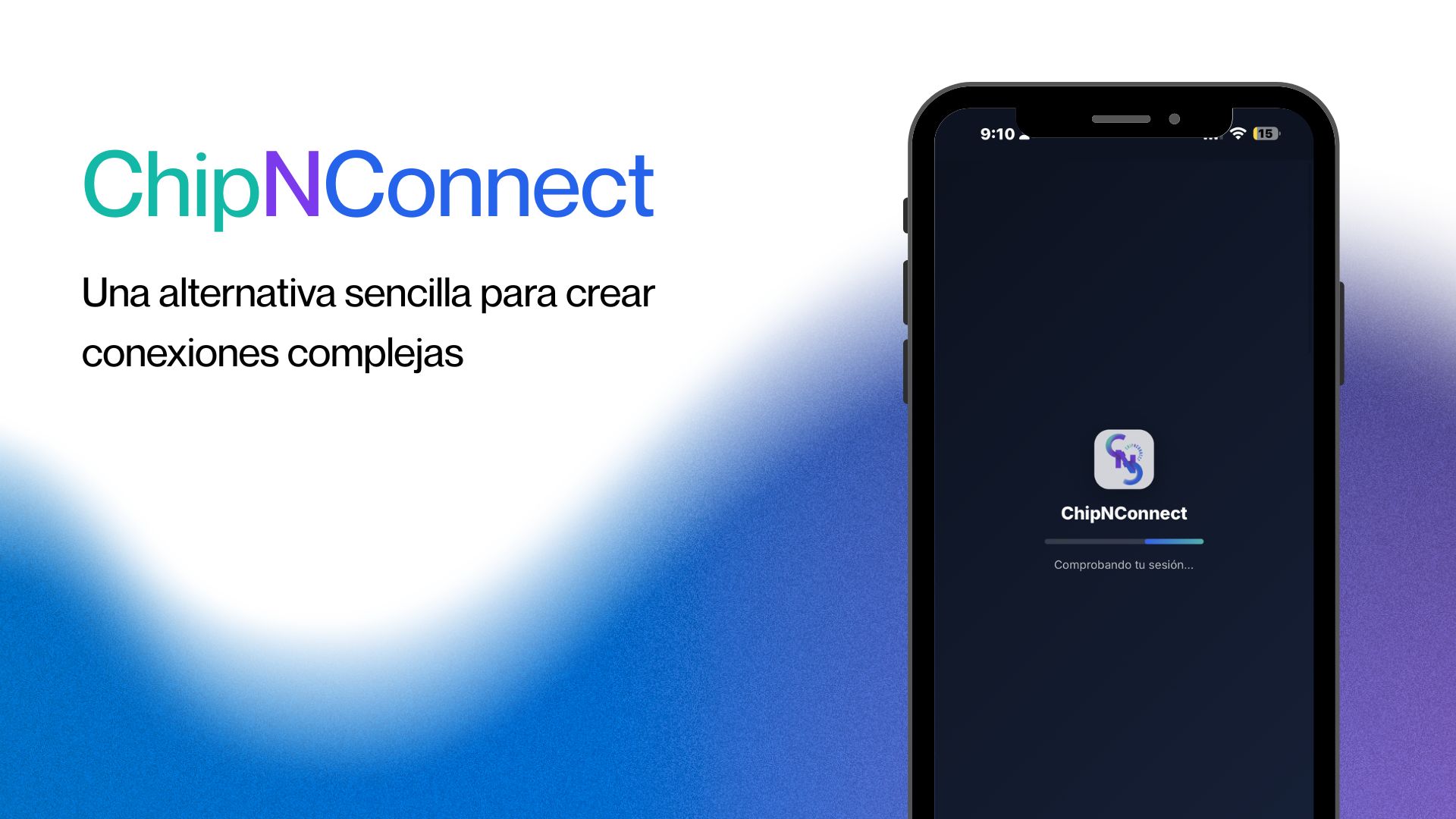
Connect better with ChipNConnect.
Professional matchmaking with the simplicity of a dating app, designed to create useful connections across the semiconductor ecosystem.
Create your profile, set your interests and swipe through other attendee profiles. When interest is mutual, it is a match and new ways to collaborate become available.
Create your profile
Introduce your role, experience, interests and goals for the day.
Swipe and discover
Browse attendee profiles and find people connected to your challenges.
Match and meet
Connect through mutual interest and schedule meetings during the event.
Chat and work groups
Message your matches and join thematic groups or collaborative projects.