
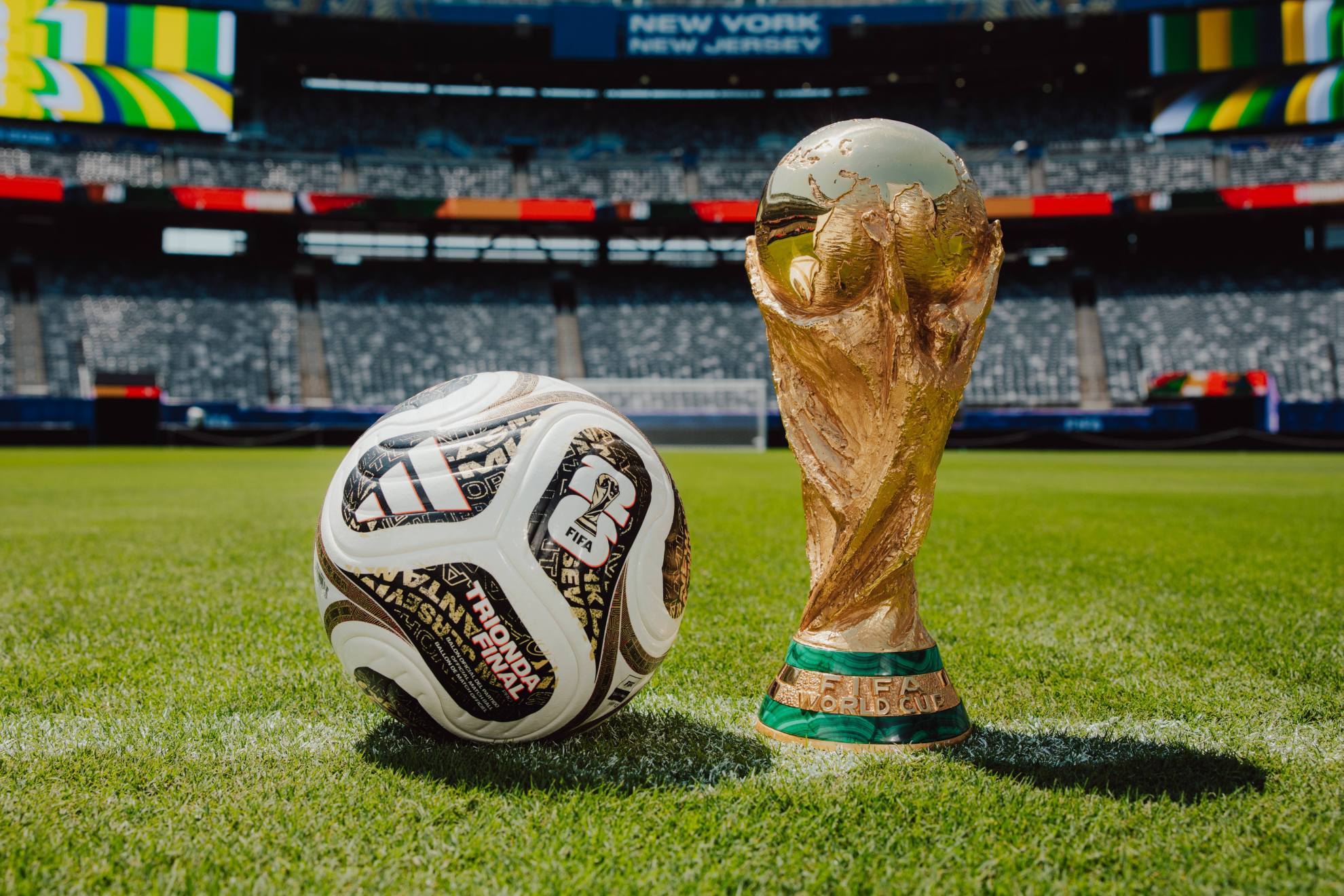
The official ball of the 2026 World Cup is called Trionda and it is much more than a ball designed to roll on the grass. Inside, it incorporates a microchip capable of recording information about the movement of the ball in real time and sending it to the video arbitration system.
The case of Trionda is a good example of how technology has been introduced into sport to form part of decisions that can change a match. Soccer is still emotion, talent and collective play, but today it is also sensors, data, connectivity, artificial intelligence and microelectronics.
In a historic competition, with 48 teams and 104 matches spread between Mexico, the United States and Canada, The adidas designed ball becomes a small technological platform in motion.

A ball connected to the VAR
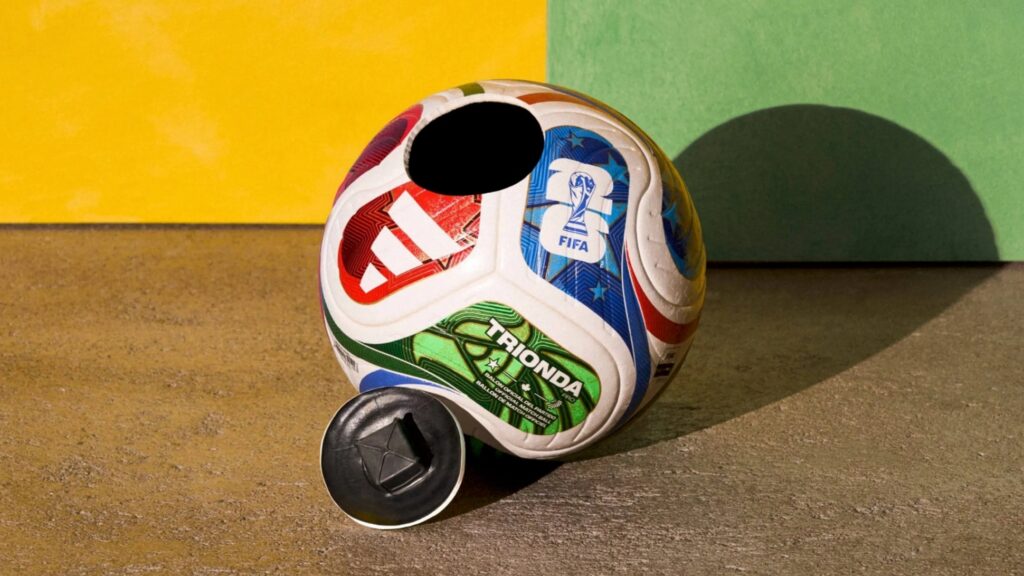
Trionda incorporates adidas Connected Ball technology, based on a high frequency sensor integrated into the ball itself. This chip records movement data 500 times per second, allowing you to know with great precision how the ball moves, when it changes direction, when it accelerates, when it receives a hit or when a minimum contact occurs.
The information is sent wirelessly to the VAR system in less than 75 milliseconds so that the arbitration team can have data practically in real time.
When the ball incorporates sensors, it ceases to be just the object of the game: it also becomes a data source to interpret what happens in the field.
The heart of this technology is an inertial measurement unit, also known as IMU. This type of sensor allows you to analyze variables such as acceleration, speed, orientation, and changes in position of the ball. That is, it converts every pass, shot, bounce, or rubbing into interpretable information.
What is the ball chip used for?
The main utility of the chip is to help the arbitration team in difficult-to-interpret plays. It does not replace the referee or make decisions on its own, but it provides an additional layer of objective information.
One of its most important uses is in the semi-automatic offside trap. To determine if a player is in an anti-regulation position, it is not enough to know where he is located. It is also key to identify the exact moment in which your partner hits the ball.
The Trionda sensor allows you to detect that moment with a much higher precision than that human observation can offer.
It can also help in the detection of minimum touches. A slight head detour, a hand rub, an almost imperceptible bounce, or a small deviation can completely change a play. The chip records those variations and allows the VAR to contrast them with the camera images.
In practice, the ball becomes one more data source within the arbitration system. The final decision still corresponds to the arbitration team but now has information from the central object of the game: the ball.
How a chip is integrated into a ball
One of the great challenges of this technology has been to integrate the sensor without altering the behavior of the ball. A professional ball must maintain its weight, balance, rebound, trajectory, and feeling of hitting. If electronics modify flight or control, innovation would make sense.
In Trionda, the sensor is integrated and protected to resist impacts, vibrations, and extreme game conditions. The structure is designed so that the ball maintains its stability and its aerodynamic behavior.
In addition, by including electronic components, the ball needs to be loaded before matches using a wireless induction base. A full charge can offer around six hours of operation, enough to cover a match, a possible extension, and a penalty shootout.
It is a striking detail: the World Cup no longer only inflates, it also loads.
Trionda design and symbolism
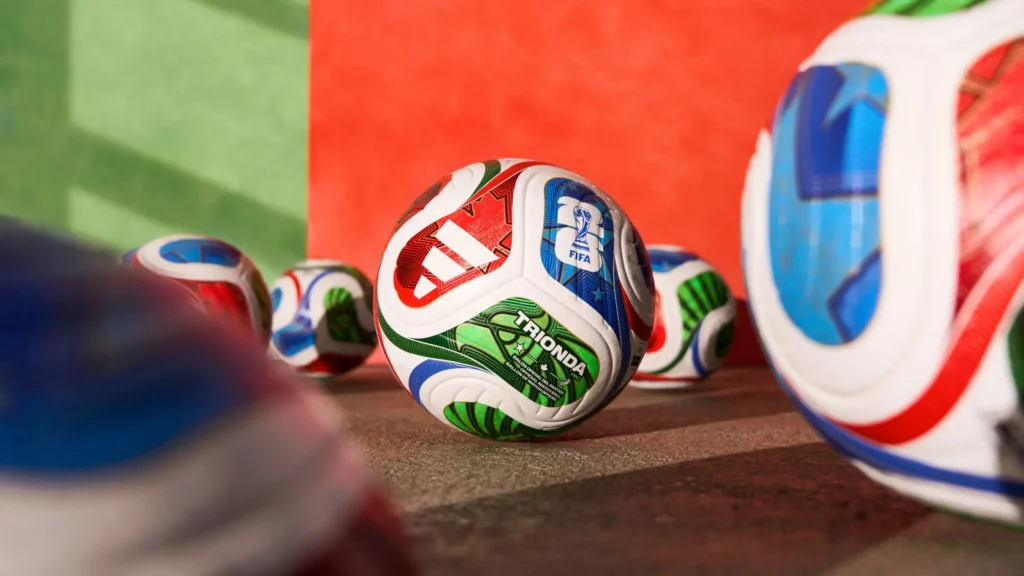
The name Trionda refers to the triple headquarters of the 2026 World Cup. Its design pays tribute to the three host countries through recognizable colors and symbols.
Red evokes Canada and incorporates the maple leaf. Blue represents the United States. Green symbolizes Mexico and includes the reference to the Mexican eagle. All this is integrated into a visual design that seeks to represent the union of the three organizing countries.
But innovation is not just on the chip. Trionda features a four-panel structure, a configuration designed to improve aerodynamic stability and offer more consistent flight paths. Its panels are heat-sealed, which eliminates traditional seams and reduces water absorption in rain or wet conditions.
The outer surface incorporates reliefs and textures designed to improve the player’s grip, control and contact with the ball.
A high-precision manufacturing
The manufacture of a ball like Trionda combines advanced materials and very demanding controls. Light and flexible synthetic layers, technical foam sheets, laminated fabrics, and special coatings are used to help protect the ball from wear and tear.
Then come the quality controls. An approved competition ball must meet strict requirements for weight, circumference, roundness, rebound, water absorption, pressure loss, and resistance. In this type of test, it is analyzed if the ball maintains its shape and behavior after repeated impacts, intensive use, and demanding conditions.
In a sport where the difference between goal and offside can be measured in centimeters, the precision begins long before the game: it starts with the design, the materials and the manufacture.

Football as a showcase for semiconductors
Trionda shows that the semiconductors are not just on computers, mobile phones, electric cars, or data centers. They are also in sport. A small chip inside a ball can generate decisive information to interpret a play in real time.
This example helps to understand why microelectronics has become a transversal technology. It is present in more and more everyday objects, often invisible. We do not see the sensor, we do not see the transmission of data, and we do not see the processing of the information, but all this happens while the ball rolls.
From MicronanoSpain, this type of case helps to bring the role of micro and nanoelectronics closer to the public in real applications. It also connects with the work of supporting the ecosystem that is articulated through its Services for companies, research centers and technology agents.
The most interesting innovation is not always visible: sometimes it is encapsulated in a small chip that measures, transmits and helps to decide in thousandths of a second.
Football will continue to be football. There will continue to be goals, emotion, mistakes, talent, and debate. But now, inside the ball, there is also technology working in silence.
Trionda is a very clear image of our time: even in something as apparently simple as a ball, a chip can change the way of measuring, analyzing, and deciding.
photographs of www.adidas.es.